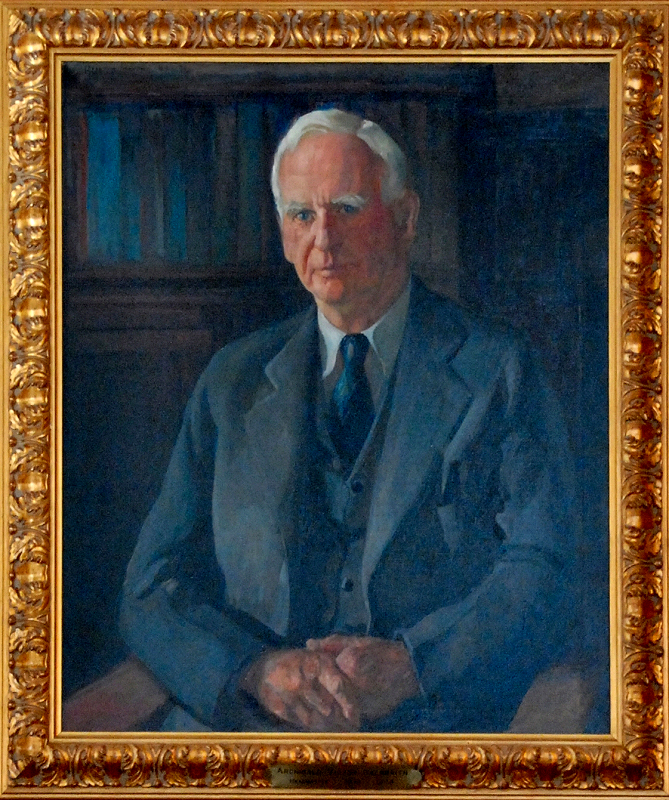
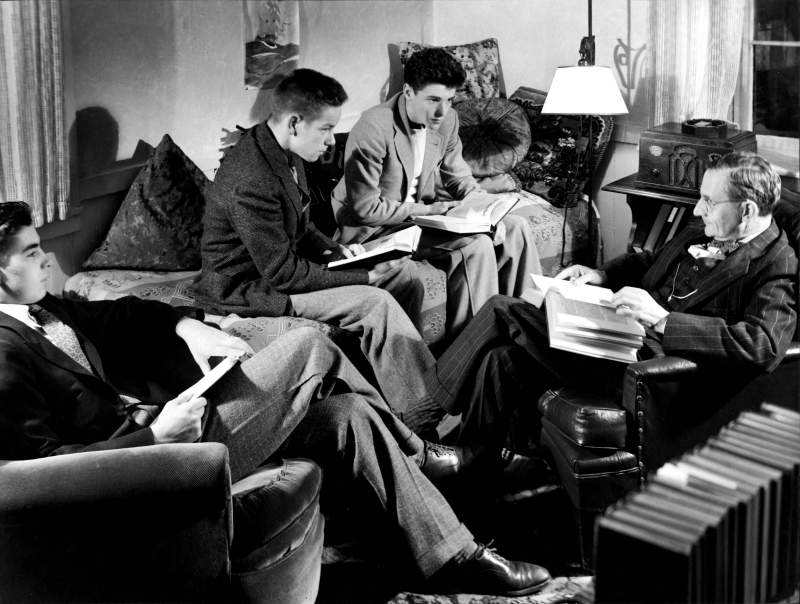
Archibald Victor Galbraith, Headmaster, 1919-1949. Please click any image to enlarge it.
In 1918-1919, the final year of Headmaster Joseph Sawyer’s administration, Williston Seminary’s outlook appeared bleak. Sawyer had been Principal since 1896, and on the faculty since 1866. Aged 77, he had been at Williston his entire adult life. Under his leadership, a vision for a different kind of school had evolved, but little had actually been done about it. Much of his effort had been in fund-raising, in which he had little experience, and for which, little taste. He had undertaken significant financial reforms at home. It was working: enrollment had stabilized, the deficits were shrinking, and Ford Hall had been opened in 1916. But the First World War changed everything. Enrollment, and with it income, plunged; deficits soared. Sawyer closed dormitories and tightened belts. Still, by the time the Armistice was signed in November, 1918, only 13 seniors remained. Depressed and in poor health, Sawyer announced his resignation in June 1919, effective as soon as a replacement could be found. (For Sawyer’s story, see Visionary Keeper of the Flame.)
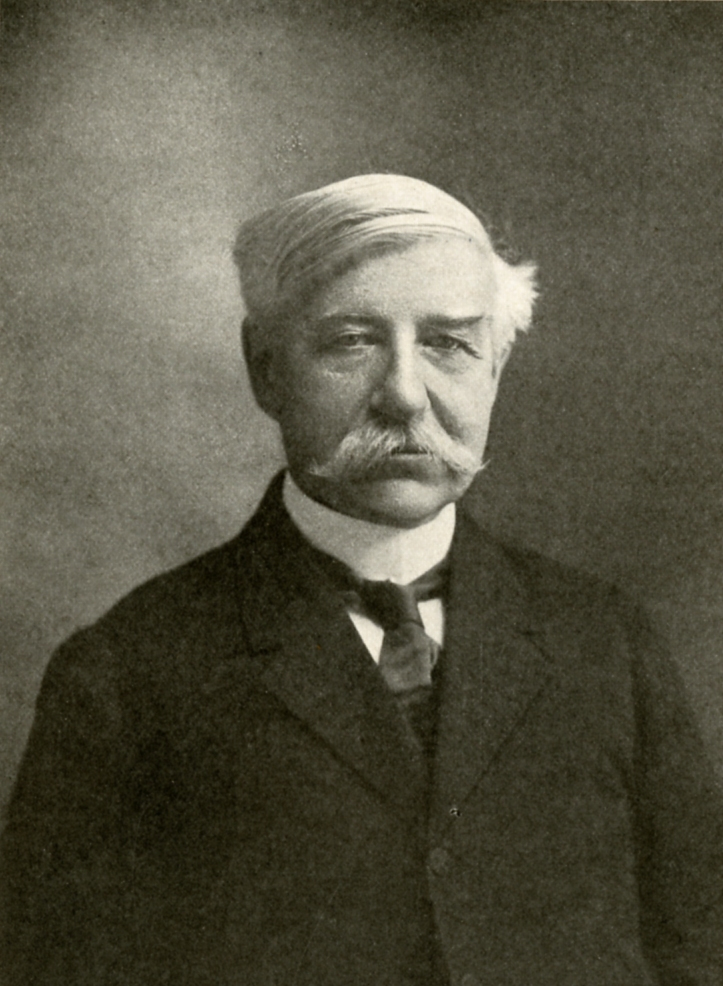
Joseph Sawyer, a few years before his retirement.
Williston had hired Principals on short notice before. Sawyer himself had been among them. The 1919 timetable appeared open-ended: Sawyer would remain Head, assist with the transition, and then move over to the Board of Trustees. But those who knew him well probably sensed that there wasn’t much time. We are not sure why Archibald Galbraith was approached. Galbraith had been teaching mathematics at the Middlesex School in Concord, Massachusetts, for 16 years. Aside from a few years as Athletic Director, and service as a dormitory head, he had relatively little administrative experience. In his own words, he “had no other plan than to continue there.” (GY, 8). But someone must have had good instincts. In July, Trustees Robert P. Clapp ‘75 (for whom the present campus library is named) and John L. Hall ‘90 met with Galbraith and convinced him of the “challenging opportunity for real service, one which [he] believed [he] was able to do.” (GY, 9) Middlesex Headmaster Frederick Winsor was supportive, and in due course, Galbraith accepted the position.
As things transpired, Galbraith would have only one meeting with Sawyer, who by this time was too sick even to move out of the Homestead. Instead, the Galbraiths moved into temporary faculty quarters in Ford Hall. Sawyer lingered a few weeks and died, worn out in service to his school, on November 7, 1919.
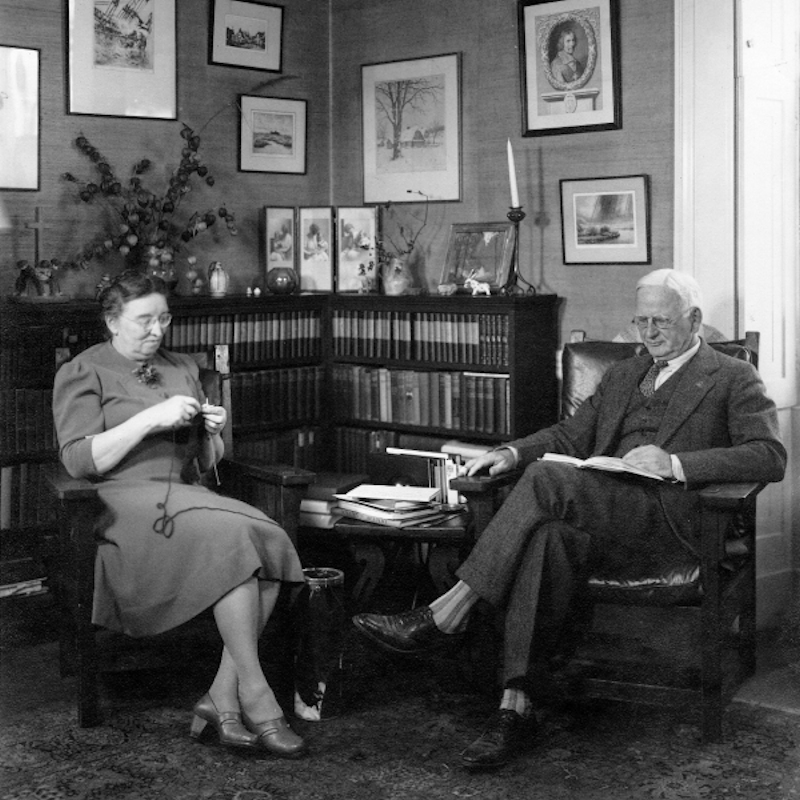
Helen and Archibald Galbraith, around 1940. Surprisingly, this is our only photo of Helen.
Archibald Victor Galbraith was born in Boxford, Mass., in 1877, and grew up in California and in Springfield, Mass. He was an 1895 honors graduate of Springfield High School, attended Harvard, where he concentrated in mathematics, was elected to Phi Beta Kappa as a junior, and received the Bachelor of Arts degree, magna cum laude, in 1899. At Harvard he also excelled in athletics, particularly baseball. (According to legend, which Harvard authorities have so far been unwilling or unable to confirm, he was the only Harvard shortstop ever to execute an unassisted triple play.) After graduation he taught and coached at Milton Academy for one year, then three more at the William Penn Charter School in Philadelphia, before he joined the Middlesex faculty. He married Helen McIntosh, of Newton, Mass. in 1905. Arch and Helen spent 1905-06 in Munich, where he pursued graduate courses. They also traveled extensively on the Continent for a year, before returning to Middlesex. They had two sons, Frederic ‘23, and Douglas ‘33.
When Galbraith arrived at Williston, he discovered a school which, in his words, was administratively “not fundamentally different from what it must have been during its formative years.” (GY, 11) For seventy years the Board, largely made up of the Founder’s friends and relations or their descendants, had labored to keep Samuel Williston’s vision alive, even as the educational needs of the country and the expectations of colleges had changed. There had been some migration away from this in recent decades – but certain Trustees were aware that it was not enough. Notably, John L. Hall ‘90, who had initially approached Galbraith, at age 47 represented the youth movement on the Board, while Clapp lived not far from the Middlesex School and may well have known Galbraith socially. They appear to have found a surprise ally in Robert L. Williston ‘88, Samuel Williston’s grand-nephew, but at 50, another relatively young Trustee.
Latin teacher Lincoln Grannis.
Galbraith inherited a strong faculty, led by Charles A. Buffum (Latin and Greek), Sidney Nelson Morse (English), and the extraordinary George Parsons Tibbets (Mathematics). Several other exceptional teachers were in early or mid-career: George Hero (History), Lincoln D. Grannis (Latin and Greek), Melvin J. Cook (Math), and Earl Nelson Johnston (Science) – the last three are very much alive in the memories of alumni from the thirties and forties. But faculty roles were, by longstanding tradition and preference, largely bounded by the walls of the classroom. Galbraith observed that even Tibbets, innovator though he was, expended most of his attention on his more talented students. Although Sawyer’s writings on “The New Williston” had called for a greater role for the faculty in student life, nothing had been done. The situation was in startling contrast to that at Middlesex.
The closing of the Chinese Educational Mission and the recall of its students to China in 1881 ended Chinese attendance at Williston Seminary for the next twenty-three years. There were several factors, not the least of which may have been that Williston’s Principals, Joseph W. Fairbanks (served 1878-1884) and William Gallagher (served 1886-1896) had little interest in maintaining international diversity. There were significant enrollments of international students (by whom we mean citizens of other countries, not American dependents of diplomats, businessmen, or missionaries) from Latin America, notably Cuba and Panama. That is perhaps not surprising, since the United States had significant political and business interests there. But with the notable exception of Williston’s first two Siamese (Thai) students, Nai Kawn, class of 1884, and Boon Itt, 1885, there was practically no attendance from any Asian countries.
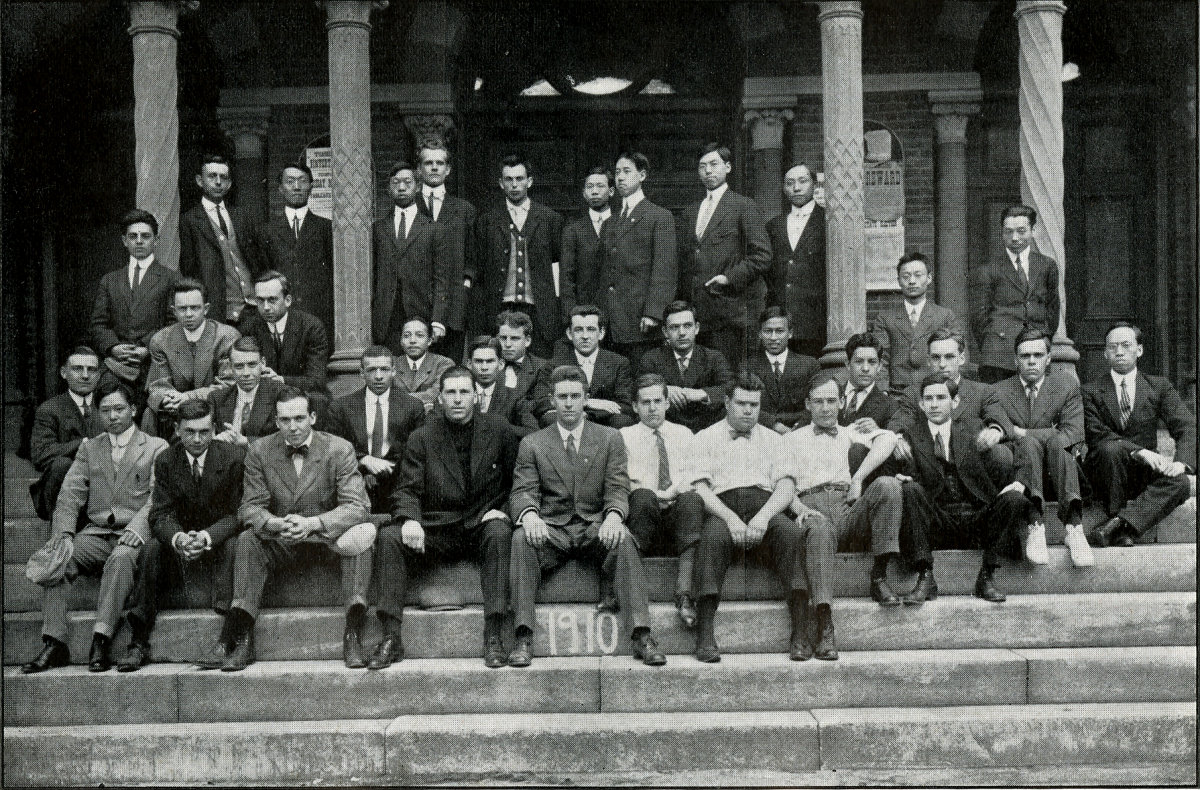
The Senior Class, from the 1910 yearbook The Log. Fully one-quarter of the class was from China. (Click on any image to enlarge it.)
The anti-Chinese atmosphere in the United States of the 1880s was certainly a factor. (Since bigotry prefers generalities, for the most part it was extended to all Asians.) So, too, were the practicalities of travel. Cross-country rail travel had improved mightily since the completion of the first route in 1869 (ironically, built largely with Chinese labor), but even with the rise of steamships and without the need for a dangerous and lengthy voyage around Cape Horn, passage from Asia was measured in weeks.
But American attitudes were also changing. Despite the Chinese Exclusion Act of 1882, which severely restricted immigration, Chinese neighborhoods – “Chinatowns” – were springing up in many larger cities, and not just on the West Coast. Inevitably, the country was becoming more tolerant, although shamefully, the Exclusion Act was not repealed until 1943.
Headmaster Joseph Sawyer
At Williston, Principal Gallagher stepped down in 1896, and was succeeded by Joseph Sawyer. Sawyer, whose biography has been treated in detail in these pages (see “Visionary Keeper of the Flame“), had a genuine, personal interest in Chinese students, having encouraged the Chinese Educational Mission students’ Christian conversion and published on the subject. When a trickle of Chinese applicants began to appear, he jumped at the chance to welcome them. As a group, the first enrollees were not an immediate success.
(A note on names: since we do not have modern Pinyin transliterations for any of the early 20th century Chinese students, their names are here rendered as they appeared in school records, using the older Wade-Giles anglicizations. American practice puts the patronymic (family name) last, although in Chinese, it is properly placed at the beginning of a name. Thus, Chin Chao Kwong, whom we are about to meet, would have signed his name “Kwong Chin Chao.” If the modern reader finds this confusing, it puts him on similar footing with Williston’s record-keepers of a century ago, who sometimes confused family and personal names.)
The first Chinese national to enroll was Chin Chao Kwong, who arrived in September, 1904. Kwong was the nephew of Kuang Guoguang, an original Chinese Educational Mission (henceforth CEM) student who had attended Phillips Exeter in 1880-81. In 1904 Kuang was a diplomat in Washington. He brought his son and nephews to visit his former host family, Hervey and Nancy Dickerman, in Holyoke, Mass. [Edward J. M. Rhoads, Stepping Forth Into the World: The Chinese Educational Mission to the United States, 1872-81, Hong Kong University Press, 2011, 100, 211] A Mrs. M. L. Dickerman of Holyoke, apparently related to that family, offered to sponsor Chin Chao Kwong at Williston. Kwong was from Tsinanfu, today called Jinan, in central China’s Shandong Province. He started as a member of the class of 1907, but his initial grades were abysmal. He stepped back to the class of 1908, but it didn’t help. After a stay of three years, he left without graduating at the end of 1907. In 1920 Mrs. Dickerman informed the school that Kwong was in the head office of his father’s mining company in Jinan. After that we lose track of him.
“A tall spare man slightly stooped with untrimmed gray moustache and formal tail coat was for long years a familiar figure to both campus and town. He was one of those persons who was always going somewhere, always on duty, and not given to casual conversation. ‘See me in my office’ was his characteristic invitation . . . ‘Old Joe’ was a host in himself. And what a complex of competing interests: schoolmaster who wanted to be a preacher, strict disciplinarian whose heart was always giving way before a youngster’s tearful plea, living laboriously in the present and yet clinging wistfully to a past long since gone by, most serious of countenances lightened at times with the pleasantest of smiles.” (Howe, 1)
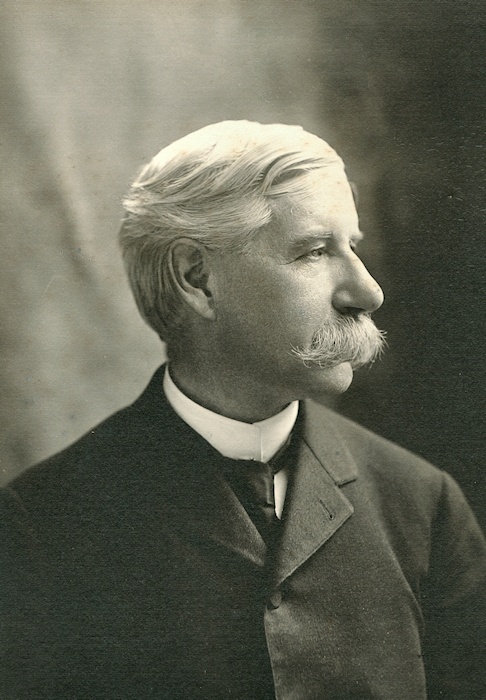
Joseph Henry Sawyer, probably around 1900. (Click any image to enlarge.)
Joseph Henry Sawyer. Williston’s longest-serving faculty member was here for 53 years, a record that no one else has even approached. That could simply be another piece of Williston lore, like the numbers on the fence or the cow in the tower, were it not that Sawyer took himself seriously as an historian and wrote a useful history of the school. He counted Samuel and Emily Williston among his friends. He knew all six of his predecessors as Principal or Headmaster, as well as his successor, Archibald Galbraith. There are hundreds of living alumni, this writer included, who knew Galbraith. His life is a kind of time travel, a bridge between centuries. So Sawyer’s longevity is enough to warrant our interest, but there is much more.
He had really hoped for something other than teaching. Though conservative by instinct and by preference, he became our most innovative Headmaster, although he had never sought the job.
Background
In advance of the Williston centennial in 1941, Herbert B. Howe, class of 1901, attempted a Joseph Sawyer biography. Howe was a competent historian and indefatigable researcher. Yet he found Sawyer to have been so self-effacing that his life away from Williston was nearly undiscoverable. The son of farmers, Sawyer was born May 29, 1842, and raised in Davenport, Delaware County, New York, some 70 rural miles southwest of Albany. Young Joe did well enough at school for his parents to agree to send him for one year to the nearby Fergusonville Boarding Academy. There, Sawyer discovered the joys of the laboratory and the library. Against his nonetheless proud parents’ expectations, Sawyer won a scholarship to Amherst College. Arriving there in 1862, he found that he was sufficiently advanced to be granted sophomore status.
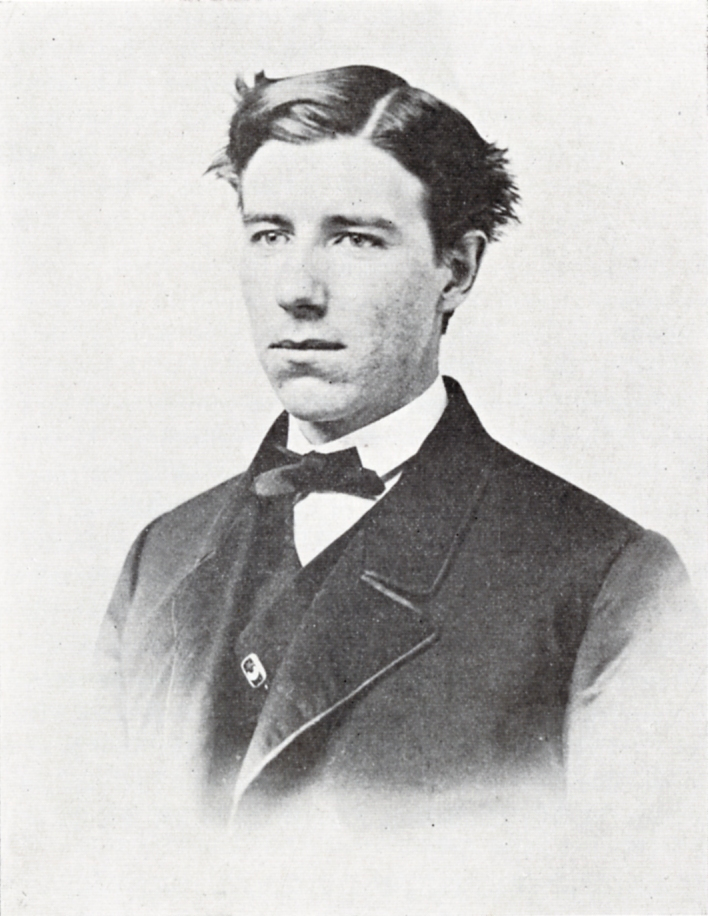
Joseph Sawyer in 1865. This may be his Amherst graduation photo; he appears to be wearing his Phi Beta Kappa badge.
He graduated in 1865, a member of Phi Beta Kappa and in a three-way tie for Valedictorian. Along the way he had decided to become a clergyman. However, this would require graduate study which, at the time, Sawyer could not afford. Having excelled in mathematics, he took a teaching position at Monson Academy, now Wilbraham and Monson.
A year later, Principal Marshall Henshaw, himself an 1845 Amherst graduate, hired him to teach at Williston Seminary. The road between Amherst and Easthampton was well-traveled in both directions. Many Williston graduates went on to Amherst – 14 of Sawyer’s 57 classmates had prepped there. Many returned to Easthampton to teach. Samuel Williston was an Amherst trustee. It is not impossible that Henshaw and Sawyer knew one another; at the very least, Henshaw was likely to have known that Sawyer was among the elite scholars in his class. So when teacher Judson Smith (Amherst ‘59) decided to move on, Amherst Mathematics Professor Ebenezer Snell recommended Sawyer to replace him.
Sawyer was hired as a teacher of pure and applied mathematics and something called “mental philosophy” — we now call it psychology, plus economics and history. Later in his career he would teach surveying and English. Teachers had to be multi-talented in those days. They had to be tireless, as well; the typical course load was six one-hour classes, every day.
Principal Marshall Henshaw.
Sawyer was 23 years old. One never knows how long young faculty will stay. Then, as now, many would teach for a couple of years and go on to grad school, or decide that teaching wasn’t for them, or find a school with greener grass. His initial plan appears to have been to recover his finances and then resume his education, but for whatever reason – and Sawyer is characteristically silent on his motives – he stayed.
Note: This article includes certain images that are, by 21st century standards, objectionable. They were, or should have been, similarly repugnant 150 years ago. But they are important examples of what minorities, including Williston’s first group of Chinese students, had to endure at the time. Recent national controversies have served to remind us that if we do not confront and acknowledge our mistakes, then progress is impossible.
The Earliest International Students
Williston Seminary, founded in 1841, had an international student clientele from the very beginning of its history. Among the first students to enroll were brothers Warren and J. Evarts Chamberlain, from the Sandwich Islands, now Hawai’i. They, like many students from abroad, were the children of Christian missionaries, sent home for the very practical reason that there were no secondary schools available where their parents were stationed. In the first two decades missionary children also arrived from Turkey and Syria. In the 1860s we start to see scholars from Persia and from South Asia: India, Ceylon. But East Asia is not represented at all. And indeed, one might argue whether an American living abroad, even if born there, might truly be called an “international student.” Meanwhile, the great majority of students hailed from the Northeast.
The very first “real” international student, one Sumner Bridgman, arrived in the fall of 1844, from Saint-Pie, Quebec, Canada. Not especially exotic, to be sure, but in any event, he didn’t stay long. He was followed in 1845 by compatriot Mary Pomeroy of Compton, Quebec, who had the distinction of being not only Williston Seminary’s first female international student, but also the last. (See “A Perfect Paradise on Earth.”) The first European students were William Marcussohn, of Odessa, Russia, who arrived in the fall of 1847, and Francisco Leiro, from Corunna, Spain, in 1848. The names and origins of all Williston students are exhaustively recorded in the Annual Catalogue of Williston Seminary. Unfortunately, prior to 1873, individual student transcripts (if they ever existed) do not survive, so we rarely have much contemporary detail on the lives of many students at the time of their enrollment.
The population of “true” international students started to grow in 1869-70. In the next four years the school would welcome multiple students from Denmark, Turkey, and notably, Japan. Then, beginning in academic 1875-76 and culminating in 1880-81, eleven young men from China would enroll. They attended under the auspices of a remarkable program, the Chinese Educational Mission (CEM).
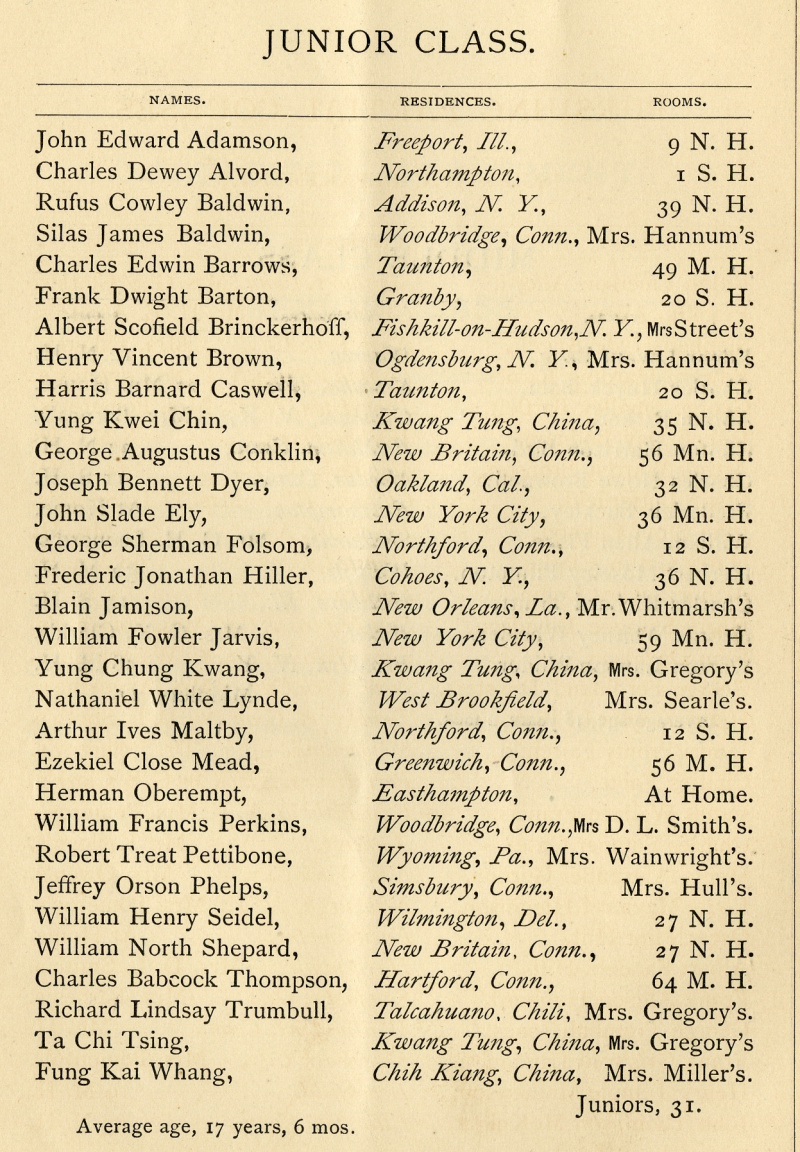
[Fig. 1] A page from the May, 1877 Annual Catalogue, recording some of the Chinese students. (Click any image to enlarge.)
A Note on Sources
The history of the Chinese Educational Mission has been treated in two excellent volumes, China’s First Hundred: Educational Mission Students in the United States, 1872-1881, by Thomas E. LaFargue (1942), and Edward J. M. Rhoads’ Stepping Forth Into the World: The Chinese Educational Mission to the United States, 1872-81 (2011). Professor Rhoads made extensive use of the Williston Northampton Archives in researching the latter. Full citations for both volumes are at the end of this post. Both books are highly recommended
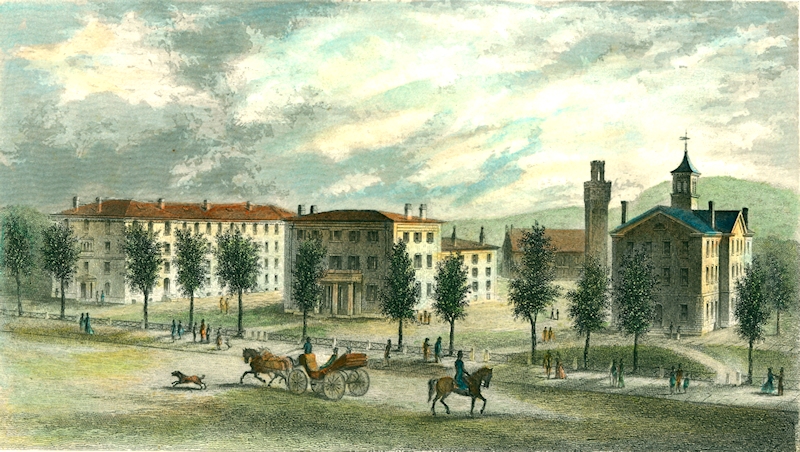
[Fig. 2] A color lithograph of the campus that the CEM students would have known in the late 1870s. North, Middle, and South Halls are in the foreground; the gymnasium to the rear. The Town Hall and Shop Row are opposite these buildings; the Payson Congregational Church outside the right margin.
China and the West
19th century China was largely, and by design, a society isolated from the rest of the world. Modernization – of the government, the military establishment, the educational system – came slowly. Efforts were made to limit exposure to unwelcome ideas that contradicted or distracted from centuries-old Confucian principles. Until mid-century, China had only one major international port of entry, the southern city of Guangdong (Canton). The British had used it to gain access to and influence in the interior. In a particularly cynical effort to gain leverage, Britain, whose East India Company held a monopoly on Indian-grown opium, had encouraged the use of the drug in China to create a demand for it. Opium could then be traded for Chinese silks, porcelains, and other goods much in demand in the West. This had been going on since the 1780s, but it eventually led to the First Opium War of 1839-1842. Hopelessly outgunned, China was forced to make significant concessions to Britain. A second conflict, 1856-1860, which also involved France, was even more disastrous for China. Opium was virtually legalized, ten treaty ports were established along the coast, and China was forced to move her capital to Nanjing after the British occupied Beijing (Sizer, 33-40, 48). But finally, even in the most conservative government circles, it was becoming apparent that access to Western technology, both military and industrial, was essential. This eventually led to the establishment of the Chinese Educational Mission.
The evangelical spirit of the times served only to exacerbate the situation. With European traders and soldiers came a wave of missionaries. True, there had been a handful of Christian proselytes in China since the thirteen century, but their impact was slight. This time it was different; it seemed that “the conviction of Europeans that it was their Christian duty and the manifest destiny of the people of the Occident to bring to China the fruits of western civilization was accepted without question” (LaFargue 1). As shall be seen, this dynamic would effect the CEM students in both the restrictions placed upon them by their Chinese sponsors, and the expectations made of them by their American hosts.
The Chinese Educational Mission
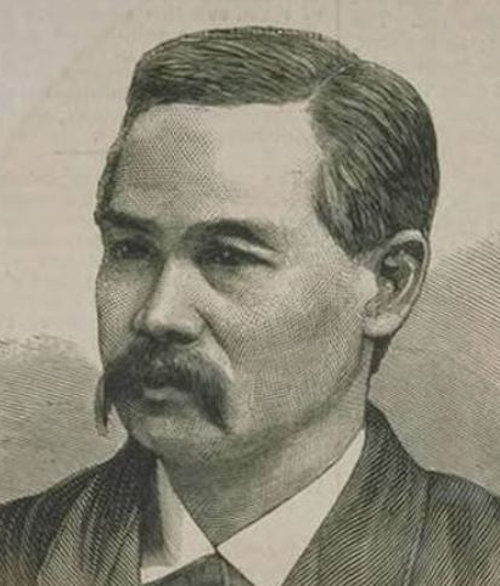
[Fig. 3] Yung Wing, from a portrait in Harper’s Weekly, May 18, 1878.
Yung Wing (1828-1912) shepherded the Chinese Educational Mission into being. Initially taught in a Christian mission school in Guangdong, he had accompanied one of his teachers to the United States and completed his education there, eventually graduating from Yale in 1854. He may well be the first Chinese national to obtain an American education (LaFargue, 18). While at Yale he had become convinced of the need for China to explore Western educational and technological models as alternatives to the traditional systems. Although he had taken American citizenship, he returned to China in 1854, and became a tea merchant and translator. Eventually he found himself in a position to lobby officials in the Imperial court about his idea for educating Chinese boys abroad (LaFargue 17-31). He became associated with a powerful official, Zeng Guofan (Tsêng Kuo-Fan). In 1864-65, on Zeng’s behalf, Yung went back to the United States to purchase machinery for a modern arsenal and shipyard. Zeng, who shared Yung’s passion for military, industrial, and educational reform, had substantial leverage in the Imperial court (LaFargue 24-28). Thus, in 1870, the Chinese Educational Mission was approved. Yung Wing was named one of the Governors.
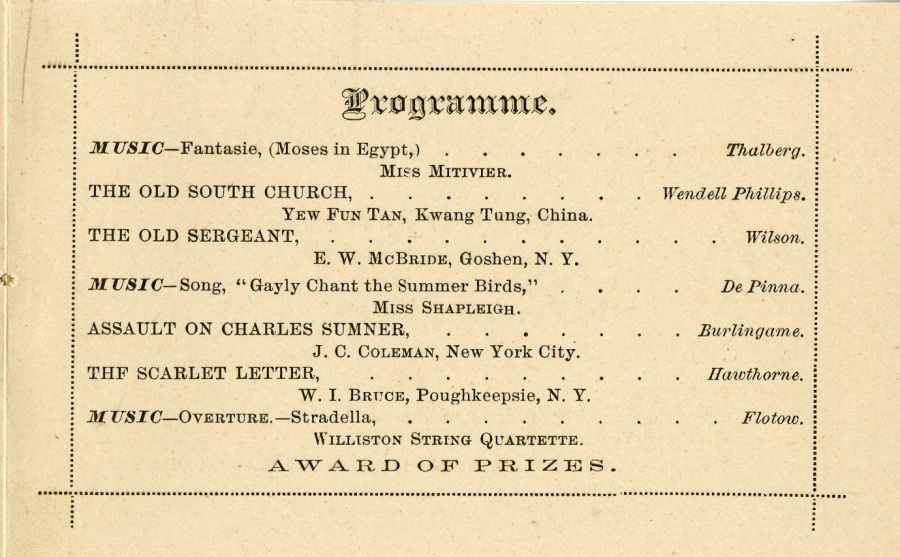
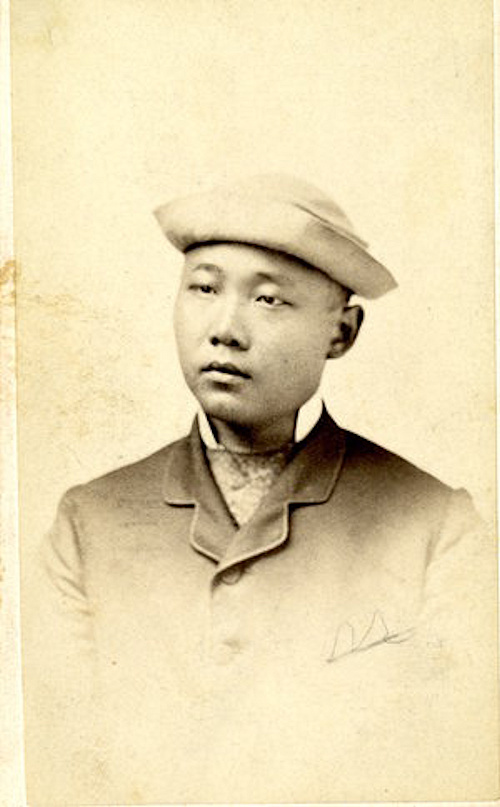
[Fig. 4] Tan Yaoxun’s participation in an oratory contest. 1877.
The first task was to recruit a group of students whose parents were willing to permit them to travel abroad for several years. Ultimately, and despite a variety of challenges detailed by Rhoads and LaFargue (Rhoads 13-30; LaFargue 33-34), 120 boys, most in early adolescence and a majority from rural areas neighboring Guangdong in the South and Hangzhou in the East, were selected. Few came from the North, those only toward the end of the program. None came from the ruling Manchu families (LaFargue 34). The boys were gathered at a school in Shanghai for initial orientation and English study.
[Fig. 5] The Prize Speaking contest of 1879. which Tan Yaoxun won.
Management of the program in the United States would be by a Chinese Educational Commission (CEC), headquartered in Yung Wing’s old student hometown of Hartford, Connecticut. Yung and a Chinese scholar, Chun Lanbin, were named Commissioners. In 1871 they traveled to Hartford to make arrangements for the boys’ arrival. The students, most aged 12-14 (Rhoads 18), would come in four groups, 1872-1875. They were placed with host families in central Connecticut and Massachusetts, and divided their study time between local schools and the CEC. Following two or three years of preparatory education, each student would enroll in a public or private secondary school in the Connecticut Valley. From 1875 to 1881, eleven students from the first two groups would attend Williston Seminary. They were:
Chen Ronggui (Yung Kwei Chin), class of 1879s*, attended 1876-79 Cheng Daqi (Ta Chi Tsing), class of 1879c, attended 1876-77 Liu Jiazhao (Kia Chau Low), class of 1880c, attended 1876-80 Tan Yaoxun (Yew Fun Tan), class of 1879c, attended 1876-79 Fang Boliang (Pah Liang Fong), class of 1880c/1880s, attended 1876-80 Kuang Yonzhong (Yung Chung Kwang), class of 1879s, attended 1876-79 Wang Fengjie (Fung Kai Whang), class of 1879s, attended 1876-79 Zhang Xianghe (Cheong Cheung Woo), class of 1880s/1881c, attended 1877-79 Kuang Jingyang (King Yang Kwong), class of 1880s/1881s, attended 1877-80 Kuang Xianzhou (Ying Chow Kwong), class of 1880s/1881s, attended 1877-80 Yang Zhaonan (Siu Nam Yang), class of 1880s, attended 1877-79
(*The designations “s” and “c” following the class year denote Williston Seminary’s two curricular divisions, Scientific and Classical. Fang Boliang and Zhang Xianghe switched divisions during their times at Williston. Zhang Xianghe and the Kuang brothers appear to have transferred to later classes.)
[Fig. 6] Fang Boliang’s entry in Samuel Baxter Allis’s autograph book.
A Note on Names
For this article we have followed Professor Rhoads’ lead and rendered all Chinese names using the modern Pinyin system of Chinese transliteration, developed in the 1950s. It differed from the older and less consistent Wade-Giles system, used by Thomas LaFargue. In the 19th century there was no translation standard at all. In the list above, the names in parentheses are those that appear in the Annual Catalogue of Williston Seminary’s rosters. Chinese and Pinyin practice places the surmame first; Williston followed English convention and placed it last – most of the time. To add to the confusion, not only are LaFargue’s name renderings often different, but students’ names are spectacularly inconsistent from one catalogue to the next. Kuang Jingyang and Kuang Xianzhou appear as Kwang and Kwong in alternate years. Tan Yaoxun is rendered Yan Fun Tan and Yew Fun Tan in different volumes. Liu Jiazhou is listed three ways – Kia Chau Lew, Kia Chan Low, and Kia Chau Low, while Zhang Xianghe’s name seems miles away from Williston’s “Cheong Cheung Woo.” Happily, Rhoads has provided a table of accurate pairings (51-54).
Expectations
[Fig. 7] Kuang Yonzhong (Yung Chung Kwang), probably shortly before he entered Williston in 1876. Compare this with the debonair young graduate in Figure 12. (Thomas E. LaFargue Papers, Washington State University, Used by permission.)
CEM had very clear expectations for its young gentlemen. Once accepted into the program, they were considered to have passed the first level of civil service examinations, and were now government employees, even granted a stipend to cover clothing and travel expenses. They were to obtain American secondary educations and continue at American colleges, then return to China to share what they had learned. They were expected never to abandon their national cultural identites. This included not cutting their queues and appearing only in traditional robes (Rhoads 29-30, 148-150). The last injunction proved impractical. Not only did the boys often draw undue attention and ridicule upon themselves, but growing adolescents need new clothes. The dress code was modified so that students were required to wear Chinese clothing only when returning to CEM headquarters, or at official functions (Rhoads 149).